Stay Up To Date With Slidebuys
Get in-store discounts, giveaways, tips, and useful advice by joining our Slide buys customer rewards & newsletter for free.
[yikes-mailchimp form="1"]
Plan a comfortable Tongariro crossing with day pack hire Tongariro advice: fit, capacity, weather layers, water, food and smart packing for the trail.
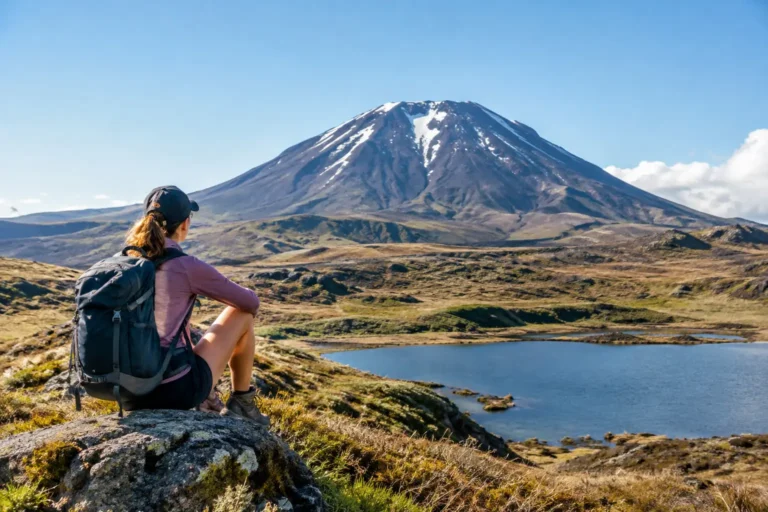
A well-fitted day pack makes the Tongariro Alpine Crossing feel simpler from the first kilometre. With day pack hire Tongariro walkers can arrive in National Park Village ready to carry the essentials comfortably, without trying to travel with a hiking pack that may only be needed for one outstanding day on the trail.
The right pack is not about carrying more. It is about carrying the gear you will use, keeping it accessible, and spreading the load so your shoulders and back are free to enjoy the volcanic landscape. For first-time alpine walkers, that practical support can make planning far less complicated. For experienced hikers, it is a convenient way to travel light while still heading out with dependable equipment.
The Tongariro Alpine Crossing is a full-day alpine walk, with changing terrain that ranges from formed track and boardwalk to steep climbs, loose volcanic ground and open ridgelines. Your clothing needs can change quickly as you move between sheltered valleys and exposed sections. A day pack gives every item a place, rather than leaving you to juggle a jacket, water bottle and snacks at each stop.
A pack designed for walking also sits differently from a casual school bag or travel backpack. It should have padded shoulder straps, an adjustable chest strap and, depending on the model, a waist belt that helps hold the load close to your body. Those details matter most after several hours on foot, when a poorly balanced pack starts to pull on your shoulders.
Hiring is especially useful for travellers moving through New Zealand with limited luggage space. You can choose a pack suited to the day, have it adjusted before you leave, and return it after your walk rather than carrying extra gear through the rest of your trip.
For most people walking the Crossing, a day pack around 20 to 30 litres is a sensible starting point. It generally provides enough space for water, food, warm layers, rain protection and personal items without becoming oversized. The ideal size depends on the season, the forecast and what you personally need to carry.
A smaller pack can work well on a settled summer day for a walker who packs efficiently. In cooler months, or whenever the forecast calls for wind, rain or low temperatures, extra capacity is useful for bulkier insulating layers, gloves and a warm hat. The goal is not to fill the pack. A partly filled pack is easier to organise and lets you add or remove a layer without forcing everything else out.
If you are sharing items with a friend, decide before leaving who will carry what. One person might carry a first-aid kit and sunscreen while the other carries additional food. Keep the overall load fair, particularly if fitness levels differ. Each walker should still have their own water, warm layer and weather protection close at hand.
Try the pack on with some weight inside it, not when it is empty. Adjust the shoulder straps so the pack sits high and close against your back, without restricting movement. Clip the chest strap so the shoulder straps remain comfortably in place. If there is a waist belt, position it around the top of your hip bones and tighten it enough to steady the pack rather than squeeze you.
There should not be a large gap between your back and the pack. Nor should the straps dig into your neck. Take a few steps, bend gently and reach your arms forward. A quick fitting check at the start can prevent hours of readjusting later.
Local staff at The Alpine Centre can help with this part. It is a straightforward service, but it is valuable when you are unfamiliar with the pack or preparing for your first alpine day walk.
Pack for the conditions you may meet across the whole day, not only for the weather outside your accommodation at breakfast. Tongariro National Park has an alpine environment, and the forecast can be different from nearby towns. Check the most current track and weather information before you set off, then choose your equipment accordingly.
Place heavier items, such as water, close to your back and around the middle of the pack. This keeps the weight stable. Lighter, bulkier items can sit lower down or towards the outside. Keep anything you may need quickly, such as sunscreen, a map, snacks or a rain jacket, in an outer pocket or at the top.
A useful day pack for the Crossing normally carries:
Food is more than a reward at the end of the track. Regular snacks help maintain energy through the long climbs and can make a real difference to how steady you feel late in the day. Choose food that is easy to eat in a breeze or during a short stop. Keep rubbish in a small bag and carry it out with you.
Water is one of the heaviest items in a day pack, so it pays to think about where it sits. Bottles in side pockets are handy if you can reach them without taking the pack off. If not, place them near the top inside the pack, where they will not crush food or get buried under spare clothing.
Avoid packing your rain jacket at the very bottom. Conditions can shift while you are on open ground, and stopping to unpack everything is inconvenient. The same applies to a warm mid-layer. You may not need it for the first section, but it should be easy to pull on at a rest stop before you cool down.
A comfortable pack begins with sensible clothing choices. Wear layers that can be added or removed as your temperature changes. Avoid relying on a single heavy garment that is either too warm while climbing or not warm enough when you stop. Your day pack is what gives you options.
Keep wet-weather gear protected inside a dry bag or separate waterproof liner if conditions look changeable. Electronics, spare socks and food are worth keeping dry too. A rain cover can help, but a liner inside the pack adds another level of protection where it matters.
The track is exposed in places, and sun can be intense even when the air feels cool. Put sunscreen and sunglasses somewhere accessible, and reapply sunscreen during the day. A cap or sun hat is useful in settled conditions, while a warm beanie is often the better choice in colder wind. Taking both can be worthwhile if the forecast and pack space allow.
Bringing your own pack makes sense if it is already comfortable, suitable for a full day in alpine conditions and easy to travel with. It also means you know exactly where everything goes. But a large trekking pack can be unnecessary for the Crossing, particularly if it is mostly empty, while a small urban backpack may lack the support and capacity needed for the day.
Day pack hire is a practical middle ground. You can use a purpose-built pack for the walk without buying gear for a single outing or compromising on comfort. It also gives you the chance to ask local questions about expected conditions, what to wear, and how to organise your load before transport departs.
There is no one perfect pack for every walker. A fit, fast-moving hiker on a warm settled day may prefer a compact option. Someone carrying extra layers, more food, photography gear or items shared with a companion may be better with a little more space. Choose the smallest pack that comfortably holds what you need.
Before heading to your transport, put on the loaded pack and take one final look through it. Check that water, food, rain protection and warm layers are packed. Confirm that your mobile is charged, your footwear is suitable, and your valuables are secure. Leave unnecessary items behind so every kilogram in your pack earns its place.
Then focus on the good part: a day of remarkable volcanic terrain, wide alpine views and the satisfaction of walking one of New Zealand’s most memorable tracks. A properly fitted day pack will quietly do its job in the background, leaving you free to get the most from every section of the journey.